Geeta Phogat
Trailblazing her own path, Geeta Phogat is recgonized to be the first Indian woman to win a wrestling gold medal at the 2010 Commonwealth Games.
“Indian Wrestler Geeta Phogat Set to Make a Comeback.” FirstSportz, 11 Nov. 2021, thebridge.in/wrestling/paris-olympics-geeta-phogat-return-3-years-26578. Accessed 2 Apr. 2026.
Photo Credit:
Photo Credit:
“Indian Wrestler Geeta Phogat Set to Make a Comeback.” FirstSportz, 11 Nov. 2021, thebridge.in/wrestling/paris-olympics-geeta-phogat-return-3-years-26578. Accessed 2 Apr. 2026.
Career Achievements
Solidifying herself as one of the greatest pioneering female wrestlers from India, the story and accomplishments of Geeta Phogat is one that is truly remarkable. With the beginning of her early successes starting at the 2009 Commonwealth Wrestling Championships hosted in Punjab, India, Phogat swiftly ensured her victory internationally by securing gold, before rapidly progressing in her ranks and dominating in both domestic and international competitions, collecting several medals and awards over time. Only a year later, Phogat brought home India’s first ever gold medal in women’s wrestling during the 2010 Commonwealth Games in New Delhi, helping put forth India on the map for women’s athletics, and as a result, making history. Shortly after winning the Asian Olympic Qualification Tournament, Phogat continued to make headlines, as she became the first Indian woman wrestler to qualify and compete in the 2012 London Olympics. Later that year, Phogat then participated in the 2012 World Wrestling Championships, and earned Bronze, before making a consecutive comeback after taking necessitated time off for her injuries by receiving numerous medals in the 2015 Asian Championships, as well as raking in gold at the 2017 Commonwealth Championships once more. Her inspiring story was officially recognized, as Phogat was given the second-highest sporting honour; the Arjuna Award, for her contributions to Indian sports.


Her Story
Born on December 15, 1988, in Balali, India, Geeta Phogat was instantly placed in a household unlike many others. Raised in a small village in Haryana, Phogat was trained and mentored under the constant supervision of her father, Mahavir Singh Phogat. Her story is different compared to the average emerging wrestler; practicing on mud floors rather than padded mats, she grew up surrounded by the ideals of the culturally conservative beliefs of her neighboring community. The rights of women were restricted, as opportunities for work and education were often cut short due to the frequent occurrence of arranged marriages. Amongst the stark criticism many had retorted, stating that such a thing, in allowing girls to practice wrestling, was looked down upon, as it would decrease the possibility for future marriage prospects, and was labeled as “shameful”; Geeta and her three younger sisters still pushed on with the strict regimen of practice administered by her dad. Geeta’s father, once a former member of India’s national wrestling team, enforced their routines in hopes of seeing his daughters become world-class athletes. He was their biggest supporter despite the harsh treatment Geeta had received from her community and the unfavorable conditions they were dealt with. Many of her early competitions were matches against boys, as there were no girls who had even wrestled, and transportation systems were paid for with borrowed money from family and friends. Her victories had eventually won the attention of the Indian government and an athletic organization, which had provided assistance, allowing Geeta access to new training facilities in the northern state of Punjab. As her career flourished, many people who had once doubted or hailed disapproval were quickly silenced; as they saw the shining example of how athletics, more specifically wrestling, was a place for women to shine and stand out.

Her Impact
Leading by example, and with the outcome of her hard work and dedication, Geeta Phogat pushed the boundaries of the expectations placed on women. Her resilience and determination shattered patriarchal standards and norms, as her driven mindset accumulated towards the transformational and groundbreaking change in not only allowing, but also encouraging girls in chasing their aspirations in athletics; equipping them with a certain confidence in daring to chase what they believe in, without the chains of conformity withholding their power and potential. Geeta’s inspirational life story was shown and told to a larger audience, as the 2016 blockbuster hit Dangal showcased the struggles and triumphs that she faced; ultimately conveying the crucial message of empowerment for girls, providing them with the example of fearlessly pursuing anything they set their minds to.

Photo Credit:
Verma, Ajay . “Geeta Phogat, India’s First Female Wrestler to Qualify for the Olympics, Trains at a Center in the Northern State of Punjab.,” Reuters , 25 July 2012, www.csmonitor.com/World/2012/0725/How-an-Indian-wrestler-defied-gender-taboos. Accessed 1 Apr. 2026.

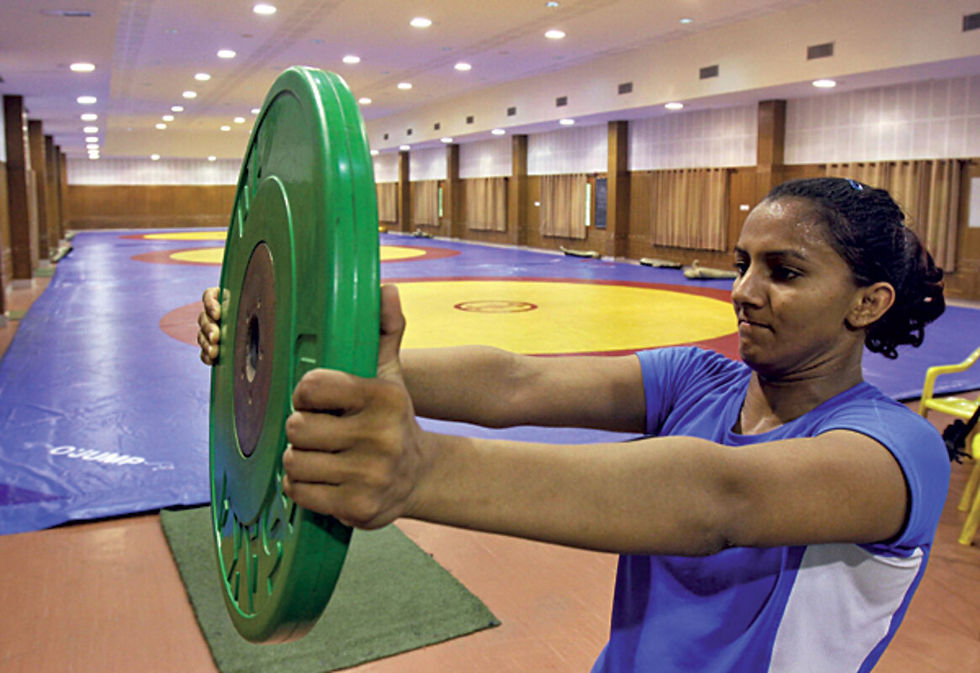
Photo Credit:
Verma, Ajay . “Geeta Phogat, India’s First Female Wrestler to Qualify for the Olympics, Trains at a Center in the Northern State of Punjab.,” Reuters , 25 July 2012, www.csmonitor.com/World/2012/0725/How-an-Indian-wrestler-defied-gender-taboos. Accessed 1 Apr. 2026.